


If you’ve stumbled across techslassh com while hunting for tech news you can actually understand, you’re probably asking the same question a lot of readers ask: is this site worth your time? That’s a fair question, and it deserves a real answer instead of the copy-paste hype you’ll find on half a dozen other “guide” pages.
This article breaks down what techslassh com actually is, what it covers, who it’s built for, and how to get real value out of it — without inflating claims or repeating vague marketing language. Think of this as the honest version of the guide you were probably looking for.
What Is Techslassh Com?
At its core, techslassh com is a technology-focused content platform. It publishes articles on subjects like artificial intelligence, gadgets, cybersecurity, software tools, and general digital trends. The goal, based on how the site presents itself, is pretty simple: take complicated tech topics and explain them in a way that doesn’t require a computer science degree to follow.
That’s a niche a lot of readers appreciate. Big-name tech outlets like Wired or Ars Technica often write for an audience that already understands the basics. Sites like techsslassh fill a different role — they’re aimed at people who want the headline, the “why it matters,” and maybe a quick how-to, without wading through dense technical explanations.
Here’s the thing worth being upfront about: techslassh.com — future of technology coverage aside — isn’t a legacy media brand with decades of reporting behind it. It’s part of a newer wave of independent tech blogs that have popped up to serve casual readers and beginners. That doesn’t make it useless. It just means you should treat it the way you’d treat any newer blog: useful for quick context, not necessarily your only source for high-stakes decisions.
Quick snapshot:
| Attribute | Details |
|---|---|
| Content focus | AI, gadgets, cybersecurity, software, digital trends |
| Audience | Beginners, casual readers, students, small business owners |
| Format | Blog-style articles, guides, how-tos, reviews |
| Best for | Quick, accessible explanations of tech topics |
| Not ideal for | Deep investigative reporting or highly technical analysis |
Key Features You’ll Typically Find on Techslassh Com
Beyond the topic list, it helps to know what the actual reading experience looks like. Most blogs in this space, techslassh com included, are built around a similar set of features:
- Category-based navigation — articles are grouped under topics like AI, cybersecurity, or gadgets, so you can browse by interest instead of scrolling an endless homepage feed
- Search functionality — a way to jump straight to a specific topic instead of digging through categories manually
- Mobile-friendly layout — since most tech blog traffic comes from phones, responsive design isn’t optional anymore, it’s baseline
- Short-form and long-form mixes — quick news updates alongside longer explainer or guide-style posts
- Comment sections or reader engagement tools — a way for readers to ask questions or push back on a claim, which can actually be useful for spotting outdated or inaccurate information
- Regular publishing cadence — new posts added frequently enough that returning visitors find something new each visit
None of this is unique to techslassh com specifically — it’s the standard toolkit for a modern content-driven blog. What matters more than the feature list is whether the site actually executes on accessibility and accuracy, which is the harder thing to measure from the outside.
How Techslassh Com Works, Step by Step
If you’re wondering what actually happens between “a tech story breaks” and “an article shows up on the site,” the general workflow for a blog like this usually looks something like this:
- Topic selection — writers or editors monitor tech news sources, product launches, and trending searches to decide what’s worth covering
- Research and drafting — the writer pulls together the relevant facts, simplifies technical language, and structures the piece for readability
- Editing and formatting — headers, bullet points, and images get added to make the article skimmable, and claims get checked (ideally) before publishing
- Publishing — the article goes live, gets tagged into the right category, and becomes searchable on the site
- Updates over time — for evergreen topics like “best laptops” or “how to spot phishing emails,” a well-maintained blog will revisit and update older posts rather than letting them go stale
Understanding this workflow is useful because it tells you what to expect. A site that regularly updates old content is doing something right. A site that never revisits old “best of” lists or security guides is one where you should double-check dates before trusting the advice.
How Techslassh Com Compares to Other Tech Sources
It helps to see where a blog like this sits relative to other types of tech coverage. No single source is “best” across the board — each serves a different purpose.
| Source Type | Example | Strengths | Trade-offs |
|---|---|---|---|
| Legacy tech media | Wired, TechCrunch | Original reporting, named sources, editorial standards | Can be dense, sometimes assumes prior knowledge |
| Beginner-friendly blogs | Techslassh com | Accessible language, quick explainers | Less original reporting, fewer named sources |
| Official documentation | Company help centers | Most accurate for that specific product | Not written for general trend awareness |
| Independent newsletters | Niche tech Substacks | Personal voice, curated picks | Coverage limited to one writer’s focus |
| Forums and communities | Reddit, specialized forums | Real user experiences, crowd-sourced troubleshooting | Quality varies wildly, no editorial oversight |
The practical takeaway: use techslassh com (or any similarly positioned blog) as an accessible entry point into a topic, then move to a more authoritative or specialized source when the decision actually matters — like a security incident, a large purchase, or a business-critical tool choice.
A Practical Example: How a Reader Might Use the Site
Consider a small business owner trying to decide whether to adopt an AI writing tool for their marketing. They don’t need a research paper on transformer models — they need a plain-language rundown of what the tool does, what it costs, and whether it’s worth the switch.
That’s the exact gap accessible tech blogs are built to fill. The reader gets:
- A quick explanation of what the tool actually does, in non-technical language
- A comparison against a couple of alternatives
- A rough sense of cost and ease of use
- Enough context to decide whether it’s worth a deeper look
From there, the smart move is to test the tool directly or check its official pricing page before committing — the blog post did its job by narrowing the field, not by being the final word. That two-step pattern (accessible overview, then direct verification) is the healthiest way to use almost any tech blog, techslassh com included.
How to Evaluate Any Tech Blog, Including Techslassh Com
Since a lot of readers land on guides like this one because they’re trying to figure out whether a site is worth trusting, here’s a quick, reusable checklist you can apply to techslassh com or any similar platform:
- Does it show publish or update dates? Undated tech content is a red flag, since accuracy in this space has a short shelf life
- Are claims specific or vague? “Many experts agree” means nothing. “According to [named source]” means something
- Does it link to primary sources? A good article links out to the company blog, research paper, or official statement it’s referencing
- Is the writing free of excessive urgency or hype? Phrases like “you won’t believe” or “this changes everything” are usually a sign of clickbait over substance
- Does the site correct itself? Look for updated posts or corrections on older articles — that’s a sign of accountability, not weakness
Running any tech blog through this checklist takes about two minutes and saves you from building habits around a source that might not deserve your trust.
Why Technology News Matters More Than Ever
It’s easy to underestimate how fast things move. A tool that didn’t exist eighteen months ago might now be something your competitors use every day. Here’s why staying current actually matters, not as an abstract idea, but in practical terms:
- Security threats evolve constantly. New phishing techniques, malware strains, and scam formats show up every month. If you’re not reading anything, you won’t know what to watch for.
- AI tools are reshaping entire job categories. Writers, designers, developers, and marketers are all seeing their workflows change because of generative AI. Missing these shifts means falling behind, not just missing trivia.
- Buying decisions get expensive fast. A laptop, phone, or software subscription is money you don’t want to waste. A little research before you buy saves real cash.
- Digital literacy is now a baseline skill, not a specialty one. Understanding basic tech concepts helps in almost every job, not just IT roles.
Sites like techslassh com exist because there’s real demand for tech coverage that doesn’t assume you already know the jargon. That’s not a small thing — plenty of people get intimidated out of learning about AI or cybersecurity because the explanations are written for engineers, not for them.
Topics Covered by Techslassh Com
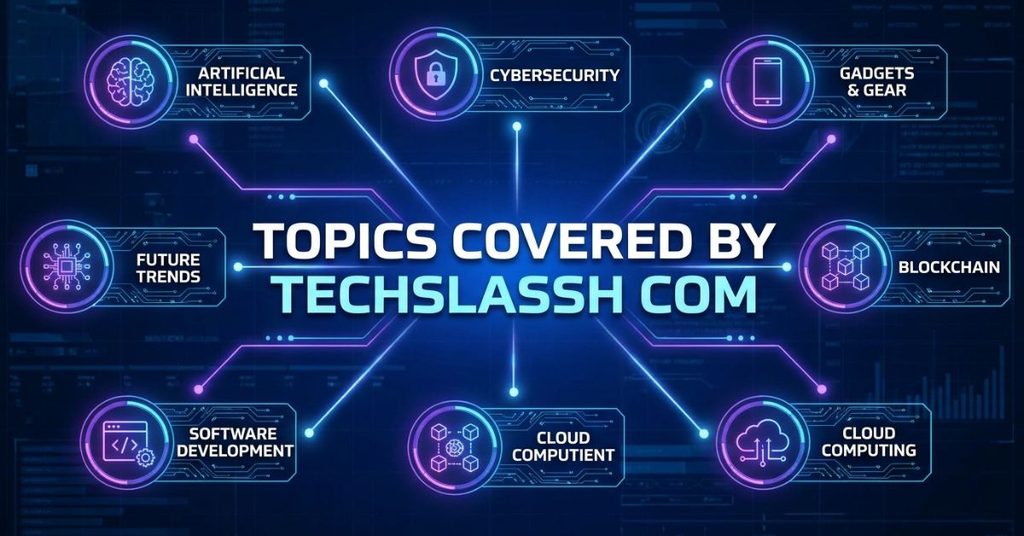
A general tech blog like this typically organizes its coverage around a handful of recurring themes. Here’s what that usually looks like, and why each category matters on its own.
Artificial Intelligence
AI coverage tends to dominate tech media right now, and for good reason. Readers want to know things like:
- Which AI tools are actually useful versus overhyped
- How generative AI (text, image, video) is changing everyday work
- What terms like “large language model” or “machine learning” actually mean in plain English
- Practical use cases — using AI to draft emails, summarize documents, or automate repetitive tasks
Good AI coverage translates jargon into something usable. Instead of “transformer architecture optimizes token prediction,” a beginner-friendly explanation sounds more like: “the AI predicts the next word based on patterns it learned, kind of like autocomplete on steroids.”
Read Also: Erikkapost.com Explained: Features, Uses & More
Cybersecurity
This is one of the most important categories for everyday readers, not just IT professionals. Common cybersecurity topics include:
- How to spot phishing emails and scam texts
- Password hygiene and why password managers matter
- What a data breach actually means for you personally
- Basic device security (two-factor authentication, VPNs, software updates)
A helpful fact worth remembering: most successful cyberattacks don’t rely on sophisticated hacking — they rely on human error. Clicking the wrong link or reusing a weak password causes far more breaches than any high-tech exploit. That’s exactly why plain-language cybersecurity content matters so much.
Enterprise Technology
Business-focused tech coverage looks at how companies adopt new tools — cloud infrastructure, workplace software, automation platforms, and IT management systems. For small business owners without a dedicated IT department, this kind of content acts like a translator between “what the tech industry is talking about” and “what I should actually consider buying.”
Consumer Technology
This is the bread-and-butter content most readers come for: smartphone comparisons, laptop reviews, smart home gadgets, wearables, and buying guides. Consumer tech content answers the question everyone eventually asks: “Is this thing actually worth my money?”
Startups and Innovation
Coverage of new companies, funding rounds, and emerging products gives readers a window into where the industry is headed. Even if you’re not an investor, this kind of content helps you spot trends early — which tools are gaining traction, which industries are being disrupted, and what might be relevant to your work in the next year or two.
Cloud Computing
Cloud coverage tends to focus on things like storage services, remote work tools, and the infrastructure behind apps people use daily. Most readers don’t need to understand server architecture — they need to understand what “the cloud” means for their files, their privacy, and their monthly software bill.
Digital Marketing
For small business owners and freelancers, marketing-focused tech content covers SEO changes, social media algorithm shifts, and new advertising tools. This overlaps with tech news because so much of modern marketing runs on software and platforms that update constantly.
Who Should Read Techslassh Com?
Not every reader needs the same thing from a tech blog. Here’s a breakdown of who tends to get the most value from a site like this:
Technology Enthusiasts People who just enjoy following tech news for its own sake. They want quick updates on new releases, industry shifts, and interesting tools, without necessarily needing deep technical depth.
Business Professionals Non-technical professionals who need to understand tech trends well enough to make decisions — choosing software, evaluating vendors, or just keeping up in meetings where terms like “API” or “cloud migration” get thrown around.
Students Especially useful for students studying anything tech-adjacent who want real-world context to go with textbook material. Reading about how AI or cybersecurity concepts actually get applied helps concepts stick better than theory alone.
IT Professionals Even people working in tech benefit from broader industry coverage outside their specific specialty. A network administrator might not follow AI research closely, but a quick, accessible summary keeps them in the loop.
Startup Founders Founders need to track competitors, emerging tools, and industry shifts without spending hours buried in academic papers or dense analyst reports. Digestible tech content is a time-saver here.
Why Reliable Technology News Is Important
Here’s an uncomfortable truth: not all tech content online is accurate. A lot of it is written quickly, optimized for search engines rather than truth, or recycled from other sources without verification. That’s true across the internet, not just for any one site.
This matters because bad tech advice has real consequences. Believing a scam warning that’s actually false can waste your time. Missing a legitimate warning because you dismissed it as clickbait can cost you money or data. The solution isn’t to distrust everything — it’s to build a habit of cross-checking anything important against more than one source, especially for decisions involving security or spending.
A reasonable approach:
- Use accessible sites like techslassh com to get familiar with a topic
- Cross-check anything that affects money, security, or major decisions against an established outlet or the official source (like a company’s own security advisory)
- Be especially cautious with “too good to be true” claims — free premium software, guaranteed investment returns, or urgent security warnings demanding immediate action
How Techslassh Com Creates Valuable Content

Most content-focused tech blogs, techslassh com included, generally build articles around a few core practices:
- Simplifying jargon — translating technical terms into plain language readers can actually use
- Structuring for skimmability — using headers, bullet points, and short paragraphs, since most readers scan before they commit to reading in full
- Covering trending topics — staying responsive to what’s currently being discussed in tech (a new AI model release, a major data breach, a big product launch)
- Practical framing — answering “why does this matter to me” rather than just reporting facts in isolation
This approach works well for accessibility, though it’s worth remembering it’s different from investigative journalism. A blog optimized for readability and trend coverage isn’t the same as a newsroom doing original reporting with named sources and fact-checking desks. Both have their place — you just want to know which one you’re reading.
Read Also: Connections Hint Forbes: Get Today’s NYT Connections Help
Benefits of Following Technology News Daily
Building a habit of checking tech news regularly pays off in ways that aren’t always obvious at first. Here’s a closer look.
Better Career Opportunities
Employers increasingly value candidates who understand current tools, especially AI-related ones. Someone who can speak intelligently about automation, cybersecurity basics, or new software trends stands out in interviews and performance reviews, even outside of technical roles.
Smarter Buying Decisions
Reading reviews and comparisons before buying tech products prevents the classic mistake of overpaying for features you’ll never use, or underbuying and needing an upgrade six months later.
Increased Business Knowledge
For entrepreneurs and small business owners, understanding tech trends translates directly into better tool choices — picking the right software stack, understanding what competitors are doing, and avoiding wasted spend on outdated systems.
Improved Digital Security
The more familiar you are with common scams and security practices, the less likely you are to fall for phishing attempts or careless password habits. This is one of the highest-value returns on reading tech news consistently — it’s cheap insurance against expensive problems.
Understanding Future Trends
Spotting trends early — whether it’s a shift in how people search online, a new category of AI tool, or a change in how companies handle data privacy — gives you lead time to adapt instead of scrambling to catch up later.
“The people who get blindsided by technology change aren’t the ones who ignored it completely — they’re the ones who assumed today’s tools would stay relevant forever.” This is a pattern that shows up again and again across industries: complacency, not lack of intelligence, is usually what causes businesses to fall behind.
Popular Categories Readers Can Explore
Based on the topic areas covered, readers exploring techslassh com will typically find content organized around categories like:
| Category | What You’ll Typically Find |
|---|---|
| AI & Machine Learning | Tool reviews, explainers, use-case guides |
| Cybersecurity | Scam alerts, security tips, breach coverage |
| Gadgets & Reviews | Smartphone, laptop, and wearable comparisons |
| Software & Apps | New releases, updates, productivity tools |
| Business Tech | Startup news, enterprise tools, digital strategy |
| How-To Guides | Step-by-step instructions for common tech tasks |
If you’re new to the site, browsing by category is usually more useful than scrolling the homepage, since it lets you focus on the topics actually relevant to you.
Tips for Getting the Most from Techslassh Com
A few practical habits make any tech blog more useful, techslassh com included:
- Bookmark specific categories, not just the homepage, so you can jump straight to topics you care about
- Check publish dates — tech content ages fast, and a two-year-old “best laptops” list is far less useful than a current one
- Cross-reference big claims — if an article makes a bold security warning or a major prediction, verify it against another source before acting on it
- Use it as a starting point, not the final word, especially for purchases or security decisions
- Follow topics, not just headlines — understanding the “why” behind a trend is more valuable long-term than memorizing individual news items
The Future of Technology Journalism
Tech journalism itself is going through a real shift, and it’s worth understanding the bigger picture here, because it explains why sites like techsslassh exist in the first place.
Traditional tech journalism used to be dominated by a handful of large outlets with big editorial teams and slow, careful publishing cycles. That model still exists, and it still matters — but it’s no longer the only game in town. Independent blogs, niche newsletters, and creator-run publications have exploded because:
- Publishing is cheaper and faster than ever. Anyone with knowledge and a website can compete for reader attention.
- Readers want speed and accessibility. A three-paragraph plain-English explainer often beats a 2,000-word deep dive for someone who just wants the gist.
- AI tools are changing how content itself gets made. Research, drafting, and even editing increasingly involve AI assistance, which raises new questions about accuracy and originality that readers should stay aware of.
- Trust is becoming more fragmented. Readers no longer default to trusting a handful of legacy names — they follow specific writers, specific niches, and specific voices they’ve come to rely on.
This shift creates real opportunity for accessible, beginner-friendly platforms — but it also means readers carry more responsibility for verifying what they read, since there isn’t always a large editorial team fact-checking every claim behind the scenes.
Frequently Asked Questions
What is techslassh com?
It’s a technology-focused blog that publishes articles on AI, cybersecurity, gadgets, software, and general digital trends, aimed mainly at beginners and casual readers rather than technical professionals.
Is techslassh com suitable for beginners?
Yes. The content style leans toward plain-language explanations rather than heavy technical jargon, which makes it approachable for readers who are newer to tech topics.
What topics does techslassh com cover?
Primarily artificial intelligence, cybersecurity, consumer gadgets, software and apps, enterprise/business technology, and how-to guides.
Why should I follow technology news regularly?
Because tech changes fast, and staying current helps with career growth, smarter purchases, better business decisions, stronger digital security habits, and early awareness of trends before they become mainstream.
How does techslassh com compare to bigger tech news sites?
It’s positioned more as an accessible entry point than a primary news source. Bigger outlets typically offer original reporting and named sourcing; a blog like techslassh com tends to focus on plain-language summaries and beginner-friendly explainers instead.
Should I rely on techslassh com for major purchase or security decisions?
Treat it as a helpful starting point rather than the final word. For anything involving significant money or personal data security, cross-check against an official source — the manufacturer’s page, a security vendor’s advisory, or an established outlet with a track record of verified reporting.
Final Thoughts
Techslassh com fits into a growing category of accessible, beginner-friendly tech blogs covering AI, gadgets, cybersecurity, and digital trends in plain language. It’s a reasonable stop for casual reading, quick explainers, and staying loosely current on tech news especially if dense, jargon-heavy coverage from bigger outlets isn’t your thing.
That said, treat it the way you’d treat any independent blog: useful for a first read, but worth double-checking against another source before making decisions that involve real money or real security risk. Used that way, sites like this genuinely earn a spot in your regular reading habits.
