
If you’ve typed “onlyworkmoods com” into Google recently, you’re not alone. It’s one of those odd little search terms that shows up more and more, and honestly, the name gives away almost nothing. Is it an app? A mood tracker for your job? Some kind of HR software?
Nope. It’s none of those things. And in this article, I’ll walk you through exactly what onlyworkmoods com is, how it works, why it keeps showing up in your search results, and whether it’s actually worth your time. No fluff, no vague guesses dressed up as facts — just what’s real.
What Is Onlyworkmoods.com, Actually?
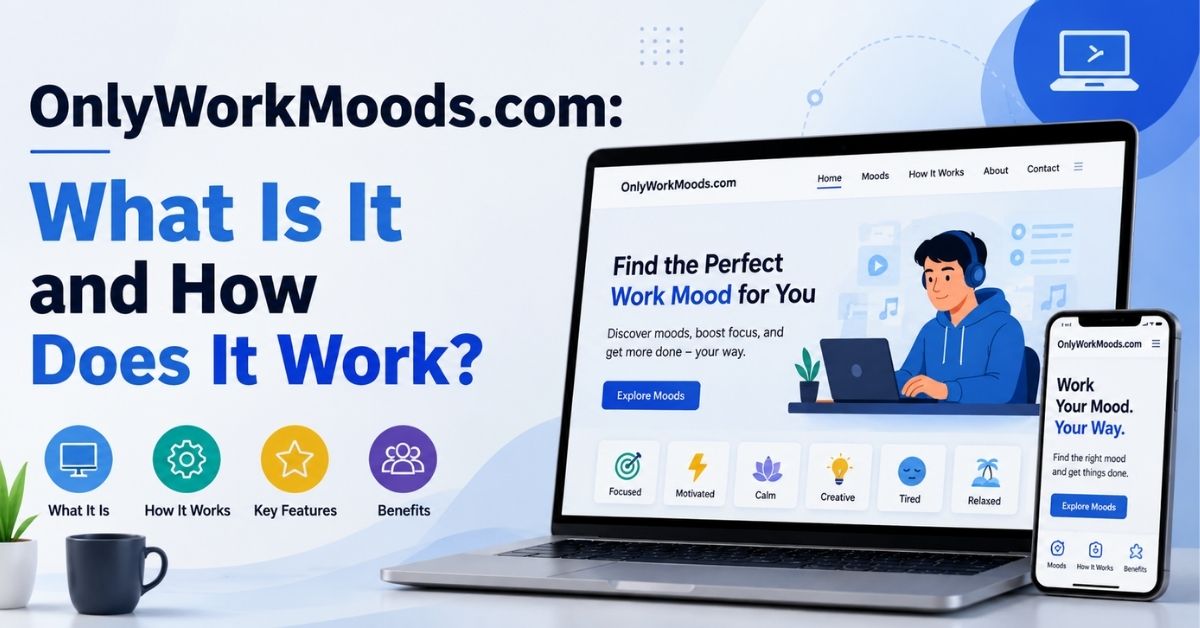
Let’s cut straight to it: onlyworkmoods com is a content website, not a piece of software, not a mobile app, and not a workplace tool of any kind. It publishes short articles about work-related topics — productivity, motivation, career advice, that sort of thing — and that’s basically the whole operation.
Here’s where it gets a little messy, though. There isn’t just one clean, single domain called onlyworkmoods.com. During research for this piece, I found several closely related domains floating around, including onlyworkmoods.org and theonlyworkmoods.com. They all use nearly identical branding and cover nearly identical topics. This kind of domain-cloning is common with low-effort content sites, and it makes the whole “brand” feel less like a single publication and more like a template that’s been copied a few times.
There’s also no clear founder, no editorial team with named bylines, and no company registration information that’s easy to track down. If you go looking for an “About Us” page with real names on it, you’ll likely come up empty. That’s a pretty significant red flag if you’re used to reading sites like Harvard Business Review or Fast Company, where you know exactly who wrote what and why.
Quick summary of what onlyworkmoods com actually is:
| Question | Answer |
|---|---|
| Is it an app? | No |
| Does it require an account? | No |
| Is it free? | Yes |
| Does it have named authors? | Not that’s easily verifiable |
| Is it a single, unique domain? | No — several near-identical versions exist |
| What kind of content does it publish? | Short articles on work, productivity, and career topics |
What the Site Is Not
Because the name sounds like it could be a tool, it’s worth being extra clear about what onlyworkmoods com is not:
- It’s not a mood-tracking app. It won’t log how you’re feeling at work or generate charts of your emotional state over time.
- It’s not an HR or workplace analytics platform. Companies aren’t using it to monitor employee morale.
- It’s not affiliated with any major, recognizable productivity brand (think Asana, Notion, or BetterUp).
- It doesn’t have a dashboard, a login screen, or any kind of account system.
If you clicked through expecting some kind of interactive experience, that’s a totally understandable mix-up. The name practically invites it. But what you’ll find instead is a fairly plain, text-based website.
What You’ll Actually Find on the Site
So if it’s not a tool, what exactly is on onlyworkmoods com? Let’s break it down.
Content Format
The articles follow a pretty predictable structure. Most posts open with a broad statement about how “the modern workplace is changing,” follow up with a handful of generic bullet points, and wrap up with a soft call-to-action nudging you to read another article.
This format isn’t unique to onlyworkmoods com — it’s a hallmark of content produced quickly and cheaply, often with heavy reliance on AI writing tools, to capture search traffic rather than to genuinely inform readers. There’s nothing wrong with using AI to help draft content (plenty of legitimate publications do), but the giveaway here is the lack of specificity. You won’t find much in the way of original data, named experts, or concrete step-by-step frameworks.
Topic Range
Despite the “work moods” branding, the site doesn’t stick to a tight lane. You’ll find articles that drift into:
- Remote and hybrid work trends
- General productivity tips
- Career advice and job market commentary
- Occasionally, lifestyle or even tech-adjacent topics
This kind of topic sprawl is a classic sign of a multi-niche content farm — a site built to rank for as many search terms as possible rather than to build authority in one specific area. Compare that to a focused workplace publication like SHRM.org, which sticks tightly to HR and employment topics because that’s its actual area of expertise.
Who’s Behind It
This is probably the most important thing to understand. There’s no visible editorial team, no author bios, and no clear ownership information tied to onlyworkmoods com. Several other websites — including Mytecharm, Benzynews, Gizmocrunch, and Rynzaa — have published their own “explainer” articles trying to describe what the site is, and interestingly, most of them are just as vague as the source they’re describing. Nobody seems to have found concrete details about who runs it or why.
That pattern matters. When multiple independent write-ups all use the same hedging language (“appears to be,” “seems to focus on,” “is likely associated with”), it’s a strong signal that nobody has verified information — they’re all guessing based on the same surface-level browse of the homepage.
Why So Many People Are Searching This Exact Phrase
You might be wondering why “onlyworkmoods com” specifically has become a search trend at all. A few things are likely driving it.
First, the name itself is unusual enough to spark curiosity. It doesn’t clearly describe a product category the way “Slack” or “Trello” does. When a name doesn’t explain itself, people search it directly to figure out what they just clicked on.
Second, there’s a snowball effect happening in search results. Once a handful of sites publish “what is onlyworkmoods com” articles, search engines start associating the phrase with genuine search demand, which encourages even more sites to write about it, which increases the phrase’s visibility further. It’s a bit of a feedback loop.
Third — and this is worth saying plainly — this pattern looks like a deliberate SEO strategy. Getting people to search your own brand name, even out of confusion, drives free organic traffic. Some newer content sites lean into oddly specific, slightly ambiguous names for exactly this reason.
Here’s a simple way to picture it:
- A site launches with an unusual, vague name.
- Early visitors search the name to understand what it is, since the name alone doesn’t say.
- Other sites notice the search volume and publish their own explainer content.
- Search interest compounds, even though the underlying site hasn’t changed much.
How the Site Is Structured
Structurally, onlyworkmoods com is about as simple as websites get. The homepage lists articles grouped loosely by category, usually something like productivity, career, or workplace trends. There’s no search bar to speak of, no tagging system for cross-referencing topics, and no user accounts.
Individual article pages tend to follow the same template every time: a short introduction, a bulleted list of points, and a closing paragraph that encourages you to browse more content on the site. There’s rarely a byline, and dates on articles aren’t always prominent, which makes it hard to tell whether you’re reading something current or something published months ago and left untouched.
In short, the structure is built for browsing, not for depth. If you’re used to sites with robust internal search, topic hubs, and clearly dated, regularly updated content, this will feel noticeably bare-bones by comparison.
Read Also: SFM Compile Meaning: What It Is, How It Works, and More
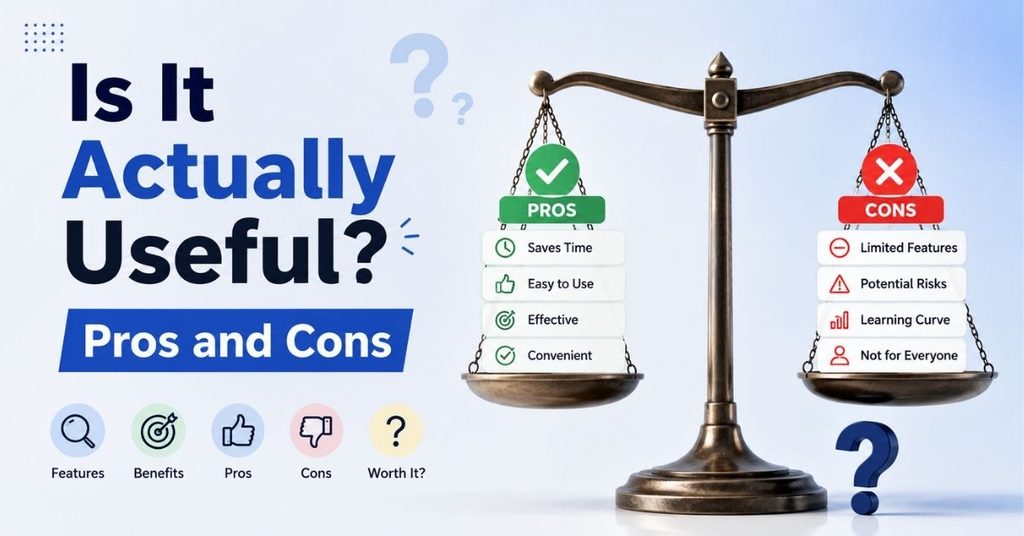
Is It Actually Useful? Pros and Cons
Let’s be fair here. Not everything about the site is a dealbreaker, and it’s worth weighing both sides honestly.
What It Does Reasonably Well
- It’s free and accessible. No paywall, no login wall, no email capture required just to read an article.
- It’s low-friction. If you want a quick, five-minute skim on a broad topic like “how to stay motivated at work,” it delivers exactly that — nothing more, nothing less.
- It’s easy to browse casually. The layout doesn’t overwhelm you with pop-ups or aggressive ads (at least based on the versions reviewed).
Where It Falls Short
- There’s no original research or data. Claims tend to be broad and unsupported — no surveys, no statistics, no citations to actual studies.
- No expert credentials back the advice. You won’t find contributions from psychologists, HR professionals, or career coaches with verifiable credentials.
- Advice stays surface-level. Suggestions like “communicate more” or “take regular breaks” are true, sure, but they’re not new information, and they don’t come with a clear, actionable plan.
- Content freshness is unclear. Without visible publish dates or updates, you can’t easily tell if what you’re reading reflects current workplace trends or something written a year ago.
Here’s a side-by-side comparison to put things in perspective:
| Feature | onlyworkmoods com | A credible workplace resource (e.g., SHRM, HBR) |
|---|---|---|
| Named authors/experts | No | Yes |
| Cited data or studies | No | Yes |
| Regularly dated content | Unclear | Yes |
| Free to access | Yes | Mostly yes, some paywalled |
| Depth of advice | Surface-level | In-depth, actionable |
| Editorial oversight | Unclear | Established |
The Mistake Most Visitors Make
The single biggest mistake people make with onlyworkmoods com is assuming the name implies functionality it doesn’t have. People arrive expecting a tool — something that tracks their mood, gives them personalized insights, or connects to their calendar — and instead find a static blog. That mismatch between expectation and reality is where most of the confusion (and honestly, a fair bit of the search traffic) comes from.
The second mistake is treating generic advice as if it were personalized or research-backed guidance. A line like “prioritize your tasks each morning” sounds reasonable, but it’s not tailored to your specific job, industry, or work style. Reading it and nodding along feels productive, but it doesn’t actually change your behavior the way a genuinely well-researched framework might.
How to Get Real Value From a Site Like This
If you do land on onlyworkmoods com — or any similar low-depth content site — you can still get something useful out of it, as long as you approach it the right way.
Read With a Specific Question in Mind
Don’t browse aimlessly. Go in with something concrete you want an answer to, like “what are three quick ways to reduce afternoon burnout.” That way, even a shallow article can point you toward a useful keyword or concept you can research further elsewhere.
Verify Any Practical Advice Elsewhere Before Acting On It
If an article suggests a specific strategy, don’t take it at face value. Cross-check it against sources that actually cite research, such as:
- Gallup’s workplace research (gallup.com/workplace)
- Harvard Business Review (hbr.org)
- SHRM (shrm.org)
These organizations publish data-backed insights, not just general statements. If onlyworkmoods com’s advice lines up with what these sources say, great — you’ve got some confirmation. If it doesn’t, that’s a sign to be skeptical.
Treat It as a Starting Point, Not a Destination
Think of onlyworkmoods com the way you’d think of a magazine rack at a checkout counter. It might catch your eye and spark an idea, but you wouldn’t build your career strategy around a single headline you skimmed while waiting in line. Use it to surface a topic, then go dig deeper somewhere with actual substance behind it.
Read Also: TechyHitTools.org: Complete Guide, Features & Honest User Reviews (2026)
A Realistic Example of How Someone Might Use It
Let’s walk through a plausible, everyday scenario.
Say someone named Amir is working from home and starts feeling unmotivated by early afternoon most days. He searches “how to stay motivated working from home” and one of the results is an article on onlyworkmoods com.
He clicks through and reads a short piece suggesting things like taking regular breaks, setting a daily schedule, and separating his workspace from his living space. None of this is wrong, but none of it is new to him either — he’s heard all of it before.
At that point, Amir has two options. He can close the tab and move on, having gained essentially nothing new. Or, he can take the general idea — “afternoon motivation dips are common” — and search for something more specific, like actual research on circadian energy patterns during work hours, which might lead him to genuinely useful, science-backed strategies for structuring his day around his natural energy levels.
The site did its job in the loosest sense: it got him thinking about the topic. But it didn’t actually solve his problem. That gap is the core issue with onlyworkmoods com, and it’s worth keeping in mind every time you land on one of its pages.
Frequently Asked Questions
Is onlyworkmoods.com a real app or tool?
No. It’s a standard content website that publishes articles. There’s no software, no dashboard, and no tracking functionality involved anywhere on the site.
Do I need to sign up or create an account?
No. There’s no login system or account requirement. You can browse and read every article without providing any personal information.
Is the content trustworthy or fact-checked?
There’s no visible evidence of fact-checking, cited research, or expert review. The advice given tends to be general and unverified, so it’s worth confirming anything important against a more credible, research-backed source before acting on it.
What’s the difference between this and an actual mood-tracking app?
A real mood-tracking app (like Daylio or Moodfit) actively logs your emotional state over time and generates personalized insights based on your input. Onlyworkmoods com does none of thatit’s purely a static, read-only blog with no tracking or personalization features whatsoever.
Is onlyworkmoods.com free to use?
Yes. There’s no paywall, subscription fee, or premium tier. Every article appears to be freely accessible.
Should I rely on onlyworkmoods.com for career or workplace decisions?
Not on its own. It’s fine as a light introduction to a topic, but for anything with real consequences — a career move, a workplace conflict, a major productivity overhaul you’re better off consulting sources with named experts, cited research, and a track record of accuracy.
Conclusion
Onlyworkmoods com is a low-stakes, low-substance content website riding on a name that’s just intriguing enough to generate curiosity clicks. It’s not an app, it’s not a scam exactly, and it’s not going to harm you by reading it — but it’s also not a resource you should lean on for anything that actually matters.
If you’re looking for a quick, free skim on a broad workplace topic and you don’t mind generic advice, it’ll do the job. If you need real depth, credible sources, or advice you can actually act on with confidence, you’ll want to look elsewhere.
