

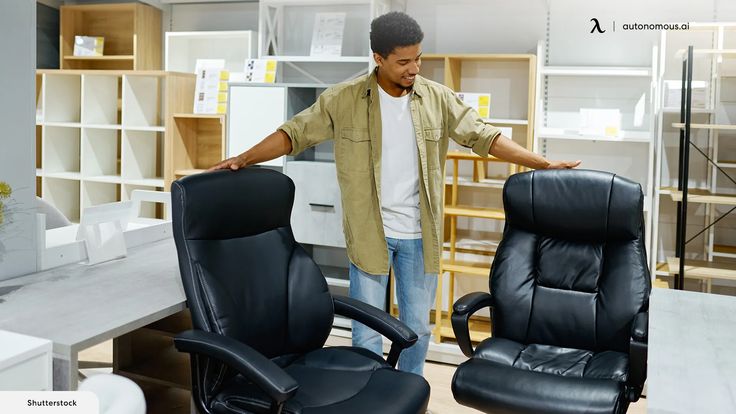
You can always spot the bad chairs in an office. They’re the ones with a cushion jammed behind the backrest, or a folded jumper on the seat, or someone sitting right on the front edge with their feet hooked around the base. Nobody complains out loud. They just fidget. Buying office chairs seems like a tick-the-box job until you count the hours. Forty a week, give or take. Per person.
The Showroom Trap
Sitting in a chair for two minutes tells you almost nothing. Everything feels okay for two minutes. The trouble starts around mid-afternoon, when the foam’s gone flat and your lower back is doing all the work.
Cheaper chairs, especially the ones made for occasional home use, tend to sag, creak and go wobbly within a year or two of daily office life. Look for AFRDI Level 6 on the spec sheet. It’s an Australian test that hammers chairs the way a busy workplace would. Plenty of decent commercial chairs carry it. It’s not glamorous, but it beats finding out the hard way.
Levers Worth Having
Some chairs have so many knobs nobody ever touches them. You don’t need that. What you do want is a seat that goes up and down, so feet land flat. And some way to lean back that doesn’t feel like the chair’s about to dump you on the floor.
Get those right and most people are sorted.
One Size Fits Nobody
This is where a lot of fit-outs go wrong. They buy fifty of the same model and hope for the best.
Picture someone who’s five foot two in a deep seat. The front edge cuts into the back of their knees, so they perch forward and lose the backrest completely. Now picture someone six foot four in the same chair. The lumbar bump lands somewhere useless and the headrest, if there is one, sits at their neck. A bigger person might find the arms pinch.
Mix it up. A couple of seat sizes, a heavy-duty option or two. It costs about the same and saves a lot of quiet misery.
Let People Try Them
Ordering in bulk straight off a website is a bit of a gamble. Some suppliers will lend you a few chairs to try first. Take them up on it. Put them in front of a few different people for a week and see what they say.
When you’re trialling office chairs like this, ask the boring questions. Was it still comfy after lunch? Did you work out the adjustments without a manual? Did the arms clash with the desk? You’ll learn more from those answers than from any brochure.
Round-the-Clock Rooms
Some places never switch off: control rooms, dispatch centres, hospitals, call centres running night shifts. A chair there might get three different people in a day and barely cool down in between. Worth asking about if your place runs overnight.
The Chair Isn’t Working Alone
A brilliant chair at a badly set-up desk won’t fix a sore neck. If the screen’s too low, people crane forward. If the keyboard’s too far away, shoulders creep up. If feet don’t reach the floor, the backs of the thighs get squashed.
A monitor arm, a footrest, or a desk you can raise and lower can sort out what the chair can’t.
Fitting Out a Whole Floor?
Ask about bulk pricing, since most suppliers have it. Some will also help work out which chairs suit which team, so the finance crew and the design team aren’t stuck with the same thing when they work in totally different ways.
Get the Chairs Right
People won’t thank you for good chairs. They just won’t complain, won’t stuff cushions behind their backs, and won’t be rubbing their necks at 4pm. That’s the goal. Sturdy, adjustable, matched to the people using them, and tried before you buy a stack.
